
If you have BPD
You may want help putting an intense experience into words, asking for what you need, or understanding a conversation after it has passed. You can use this guide on your own, with someone you trust, or in therapy.
But when a moment turns painful, it can be hard to know what to say, what to ask for, or how to find your way back to each other.
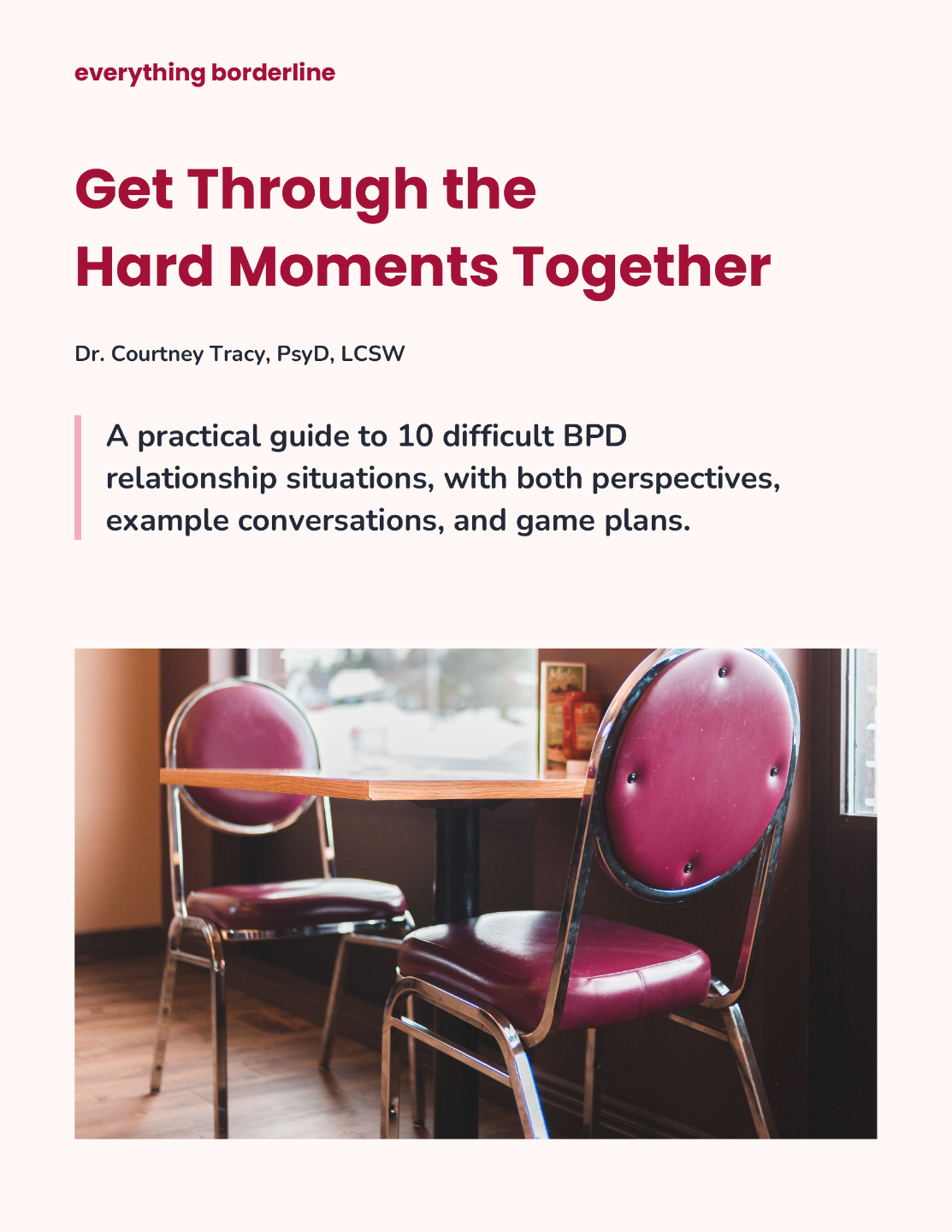
Get Through the Hard Moments Together is a practical guide to 10 difficult BPD relationship situations, with both perspectives, example conversations, and game plans you can make your own.
55-page digital PDF
Get the guide · $48 USD
You may want help putting an intense experience into words, asking for what you need, or understanding a conversation after it has passed. You can use this guide on your own, with someone you trust, or in therapy.
You may want to understand what they’re experiencing and have more options for how to respond. Your feelings and limits matter here, too. The examples make room for both.
You can use the situations as a starting point for discussion and adapt them to the person, relationship, and boundaries of treatment.

You ask for reassurance, but the conversation leaves you feeling even less sure of where you stand.
Someone changes the plan, and you’re struggling with how quickly your whole day started to feel unmanageable.
You try to give feedback. They hear rejection. Now you’re both trying to explain yourselves, and neither of you feels heard.

A promise gets broken. You want to talk about the hurt without the conversation becoming an argument about whether you should be hurt at all.

You were feeling close a little while ago. Now there’s anger between you, and you’re trying to understand what changed.

Or the argument is over, and you’re replaying what you said. You want to make it right. You don’t know how to begin.
You may recognize yourself in more than one of these moments, or on both sides of the same conversation. Wherever you’re starting, there’s room here for what you’re feeling and what you need.
Look at what might be happening for each person, including what they may be feeling, fearing, or trying to communicate. There’s room for both people’s concerns.

Explore example responses for when feelings are present, when they’re escalating, and when words are especially hard to find. Adapt them to what you mean and what you can honestly offer.

Use reconnection questions to talk about what happened, make room for both concerns, and consider what needs attention or repair.

Turn what you’ve noticed into a practical game plan. Think through what each of you can try, what support or space you need, and how you’ll come back to it.
When an argument gets out of hand When someone is late or doesn’t show up
 When a message or call goes unansweredWhen feedback feels painfulWhen hurt is met with dismissal or misunderstandingWhen a promise is broken or trust is hurtWhen someone regrets what they said or did while upsetWhen closeness suddenly turns into angerWhen an unexpected change makes the day feel unmanageableWhen you want to reconnect after a painful argument
I’ll also break down ideas from therapies used to treat BPD and show how they relate to the conversations we’re working through.

I’m Dr. Courtney Tracy, PsyD, LCSW. I live with BPD, and I’ve been in a relationship with the same partner for over 20 years. This guide brings together what I’ve learned over 15 years, personally and professionally. I’ve founded four treatment programs and worked clinically with hundreds of people who have BPD. I also work with and consult with some of the top BPD experts in the world.
When you’re already hurting, “communicate better” can leave you thinking, Okay, but how? What do I say when I need reassurance? How do I ask for space without leaving someone guessing? How do I care about their hurt without losing sight of my own?
Your feelings belong in that conversation. So do your needs, your limits, and the impact of what happened.
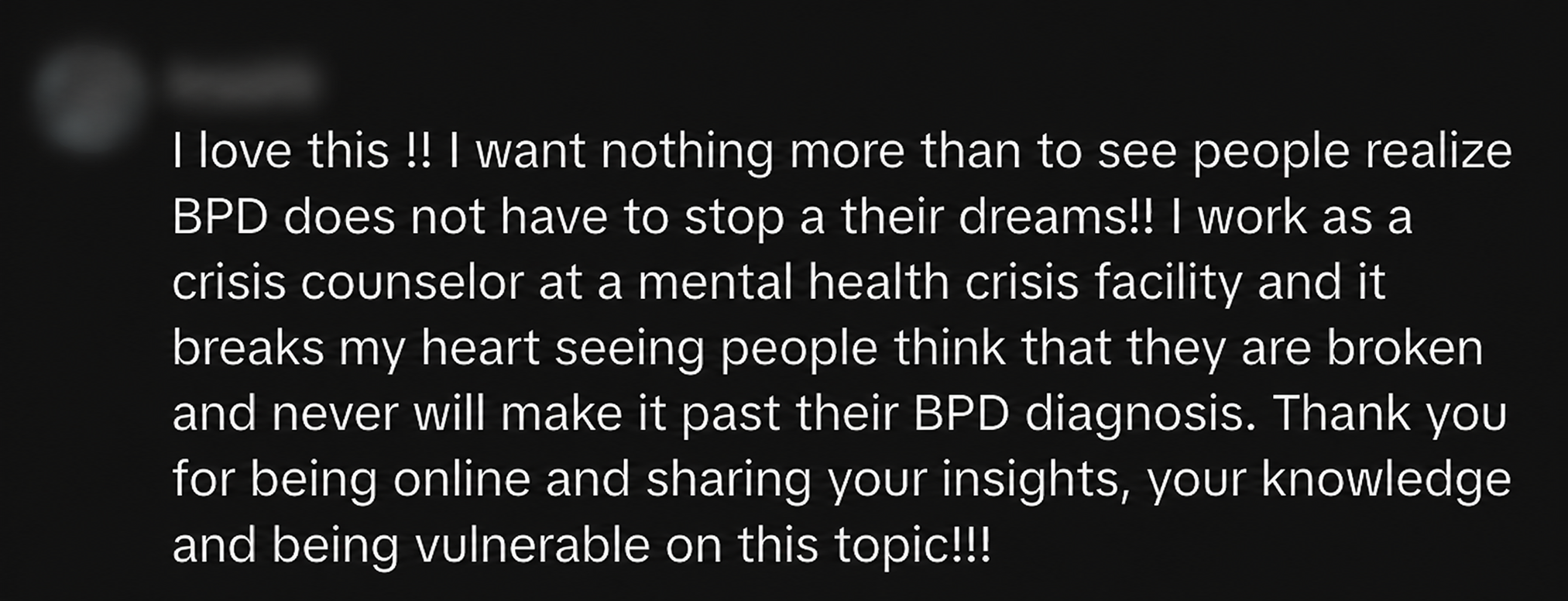
Tap any comment to enlarge it.
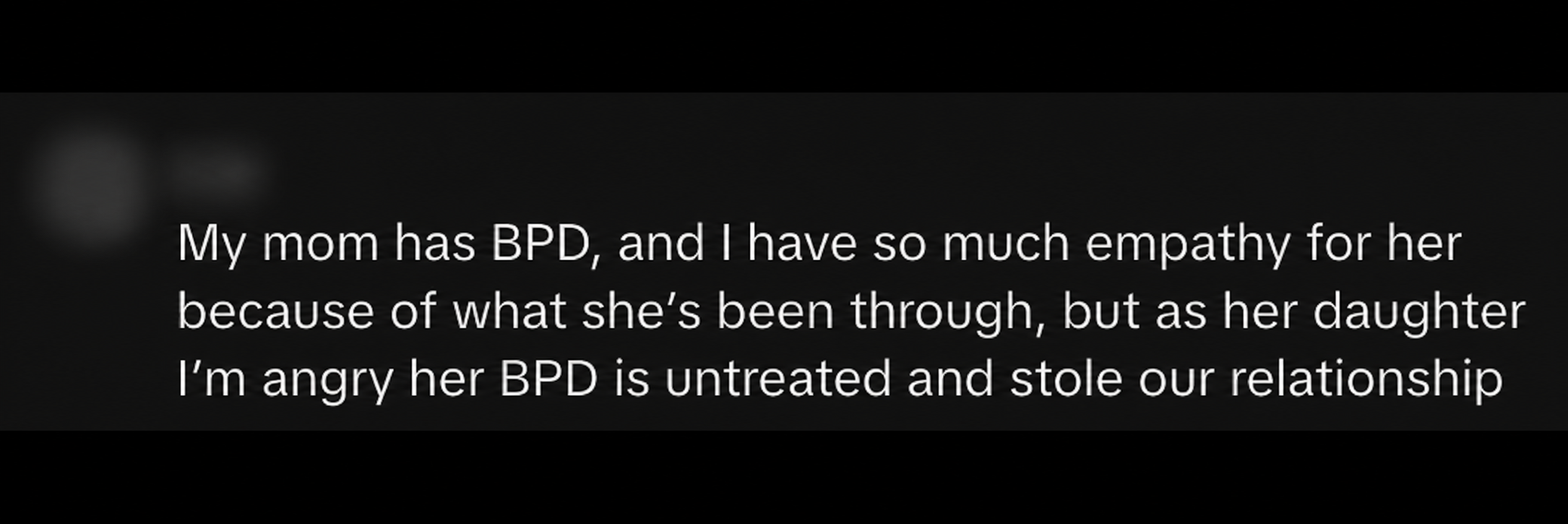
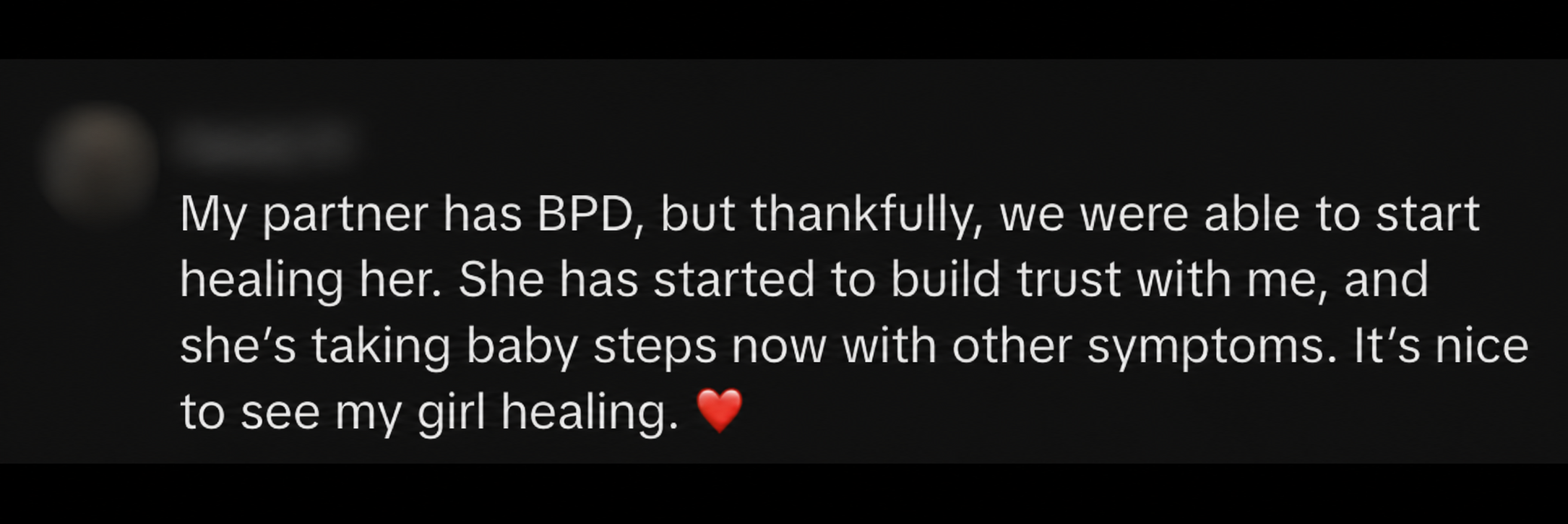
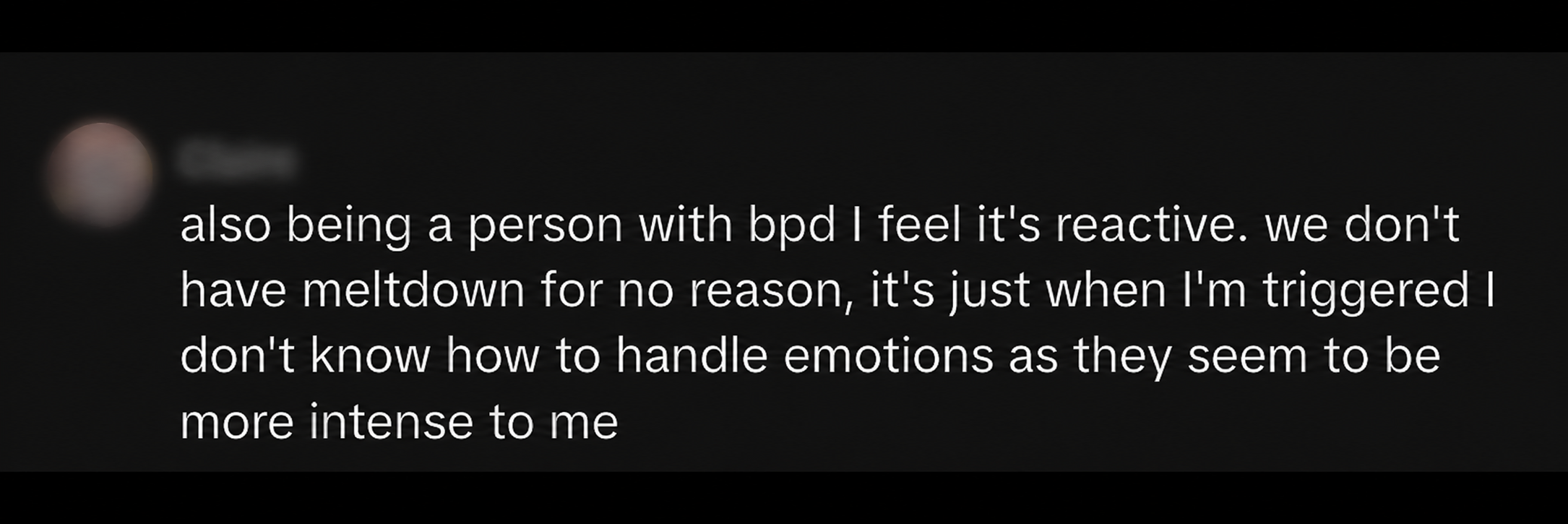
No. The guide is written with BPD experiences in mind, but these situations can happen with or without BPD. Choose what fits your experience. It isn’t a diagnostic tool.
No. You can adapt the examples for relationships with partners, family members, friends, and within treatment. Use words and plans that fit the relationship you’re in.
You can still use it to reflect on your experience and choose steps within your control. Some conversations and repairs require participation from both people. You don’t have to wait for that participation to consider what you need.
No. This is an educational guide. It doesn’t replace individualized mental health treatment or provide a complete crisis plan. You can bring a situation or section into therapy to explore it with qualified support.
Prioritize your safety and appropriate support. You don’t need to stay in an unsafe interaction, accept mistreatment, or agree to reconciliation to use this guide.
A 55-page digital PDF, Get Through the Hard Moments Together, by Dr. Courtney Tracy, PsyD, LCSW. It includes 10 relationship situations, both perspectives, example conversations, and adaptable game plans. The price is $48 USD.
Email [email protected] for help with a purchase or access question.
All sales are final. This digital guide is nonrefundable, except where required by law. Please review the details before purchasing.
Start with the one that’s been on your mind.
The conversation you keep replaying. The situation you want to prepare for. The repair you’d like to begin.
This guide gives you practical examples to turn to as you work out what a different next step could look like for you.
By Dr. Courtney Tracy, PsyD, LCSW
55-page digital PDF · 10 difficult relationship situations
Get the guide · $48 USD
Get started today before this once in a lifetime opportunity expires.